



Please click this link to Tucker Carlson’s Facebook where the slides can be accessed.
The world could end because Trump and Netanyahu don’t want to go to jail
Council Estate Media and Ricky Hale
33 minutes ago
Imagine you’re among humanity’s last survivors, explaining to your grandkids in a fallout shelter that an American paedo nuked a mountain in Iran because he was blackmailed by a guy in Jerusalem who needed a get-out-of-jail-free card. Well, you might end up doing this if Tucker Carlson is right, but then again, you probably won’t. You’ll probably be dead.
According to Carlson, the Trump administration is days from launching a nuclear strike on Pickaxe Mountain in Iran. Carlson has extensive contacts in the Trump administration, and given his brother was Trump’s speech writer, we should take the warning seriously.
Read the full text of this Substack posted today.
Oxford University is hosting speakers accused of promoting racism and misogyny. Who do these laws protect, and at whose expense?
Click this link to watch the Good Law Project’s expose.
Dozens of academics and celebrities urge Oxford University to block Jason Arday accuser from speaking at event
Exclusive: Prominent academics, MPs, and campaigners have called for the talk with Nathan Cofnas to be scrapped
Read the news report from The Independent, UK, here.
A new UK hierarchy of racism will gag Israel critics from Westminster to the playground
Antisemitism is being weaponised once again, as Andy Burnham’s government rounds on the Jewish-led Greens and rolls out a Big Brother programme in schools
Jonathan Cook 2 Nov. 2026
Read Cook’s latest substack here.

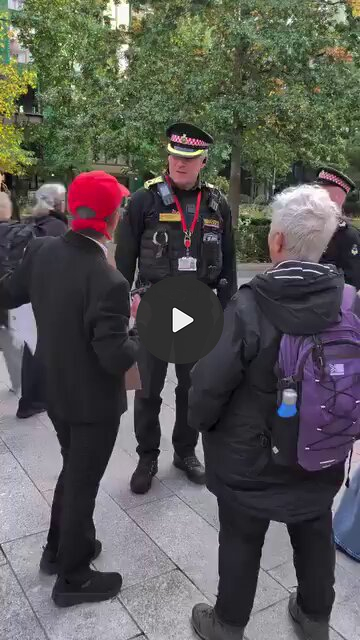
Britain / 30 October 2026
More than 50,000 back inquiry into Britain’s complicity in the Gaza genocide
Read the news report here.
Report: UK universities invest £456M in firms complicit in Gaza genocide
Click this link to access the news report.
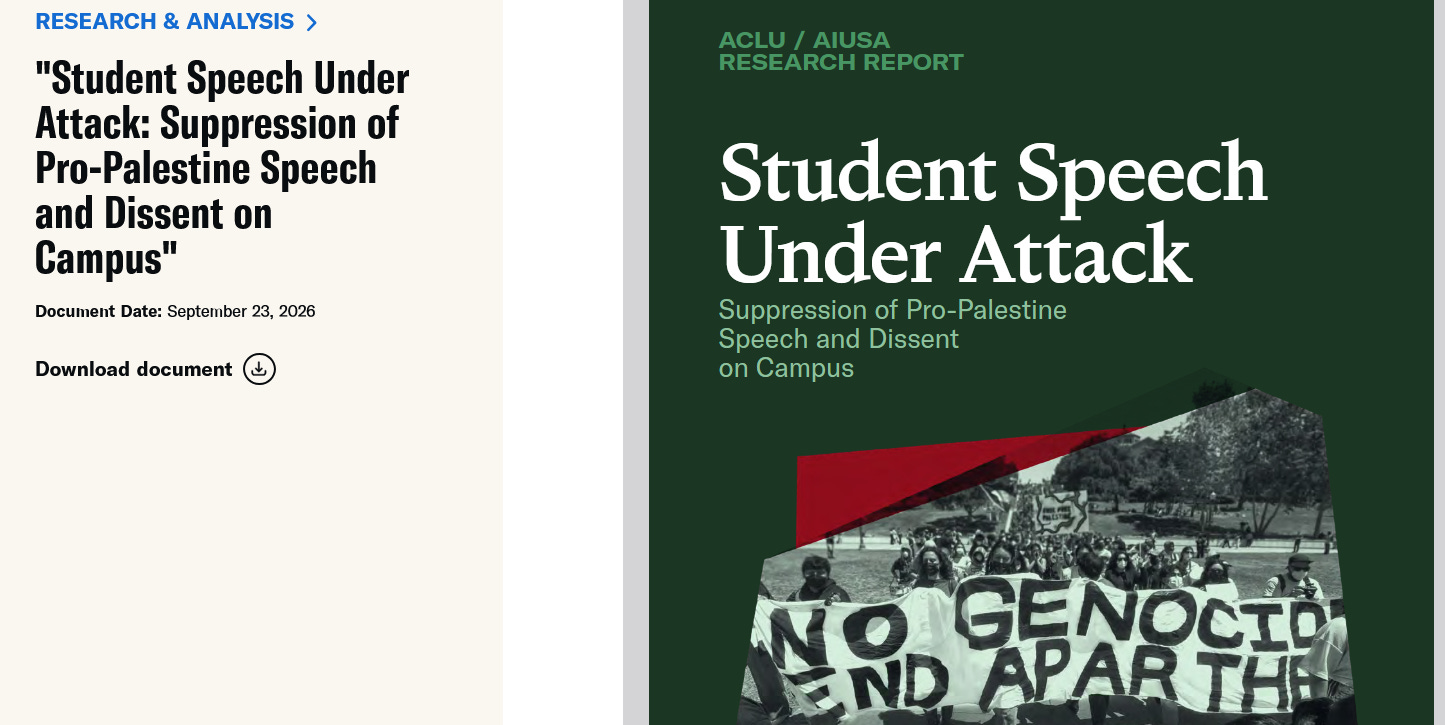
To access the ACLU and Amnesty International report on the suppression of Pro-Palestine Speech and Dissent on Campus click the link here.

Lessons in Repression: Silencing Campus Workers on Palestine Since October 7, 2023
Middle East Studies Association10/09/2026
Middle East Studies Association (MESA) | Academic Freedom Initiative | –
Washington, DC — Today, the Middle East Studies Association (MESA) released a major new report, Lessons in Repression: Silencing Campus Workers on Palestine Since October 7, 2023, that shows how higher education institutions converged with government and outside actors to retaliate against employees speaking out for Palestinian rights. With startling intensity, university administrators punished employees regardless of rank, position, or profile, after campuses became lively with anti-genocide demonstrations and Palestine advocacy among students, staff, and faculty. The report dissects the multitude of tactics they deployed to stifle academic freedom and free speech, and the pretexts they used to try to cloak their political motivations.
Based on analysis of nearly 200 incidents of retaliation, and interviews with 31 targeted employees, the report gives deep insight into the range of tactics that university administrators and others deployed to try to shut down teaching and speech, how employees responded, and what can be done to continue to stand up for academic freedom.
Access the full text and download the report at this link.


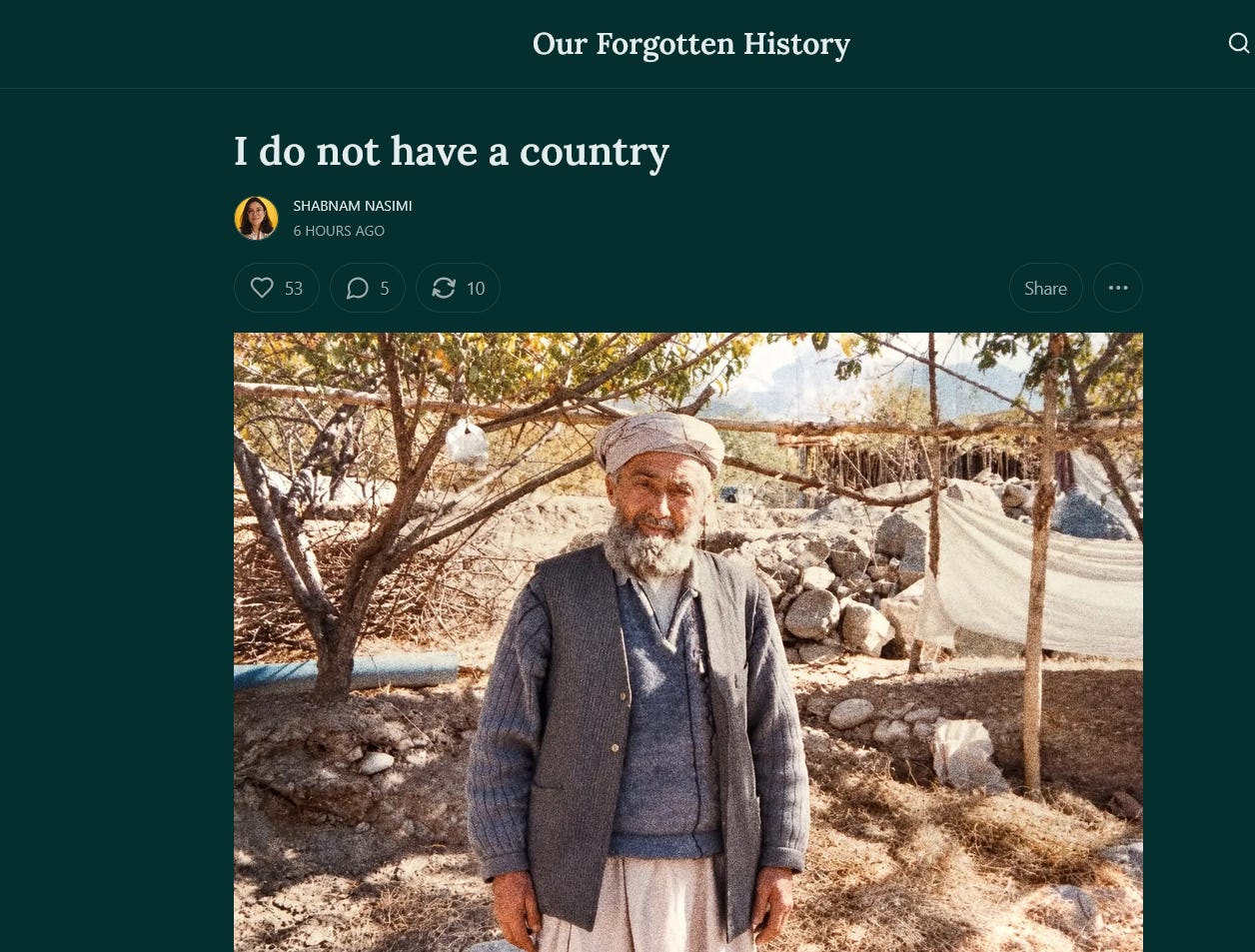
Source, below:
“For too long, our stories have been told about us, never by us. What you were taught about places like Afghanistan, South Asia, the Middle East, was decided by people who had every reason to flatten it into a single word: war. The rest was erased, rewritten, or locked away.
I’m taking it back, piece by piece, the history, the culture, the lives that never made the headline.
I do this with no funding, no institution, no one behind me. It means no one can tell me what to write, what to soften, or whose version to repeat. But it also means this work survives on one thing: readers who decide it’s worth paying for.
If this piece moved you, that decision is yours to make. A paid subscription is what keeps this independent journalism going and keeps these stories reaching the world.
And if you take nothing else: read it, sit with it, and send it to someone. Every person who reads is one more who can’t say they were never told.”

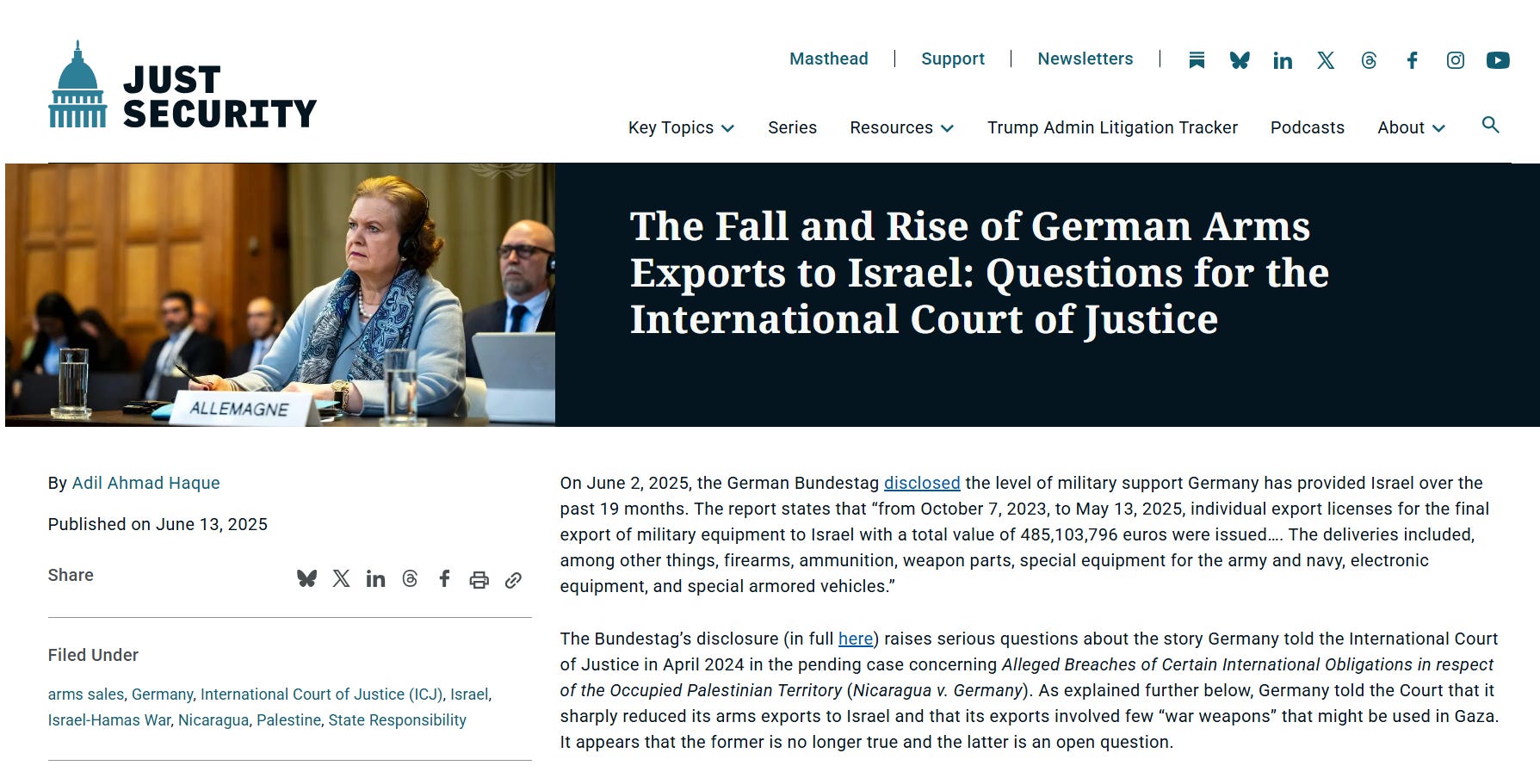
Read the above analysis here.
How Nicaragua defended its ICJ case accusing Germany of complicity in Israel’s genocide
Managua urged judges to reject German objections, highlighting Berlin’s own duties to prevent genocide and other grave violations against Palestinians.
Sondos Asem 9 Sept. 2026
Nicaragua has accused Germany of trying to shield its support for Israel from judicial scrutiny, telling the International Court of Justice (ICJ) that Berlin continued to authorise substantial military exports despite knowing of the serious risk of genocide and other violations against Palestinians.
Appearing before the court in The Hague on Tuesday, Nicaragua urged judges to reject Germany’s preliminary objections and allow its case against Berlin to proceed to the merits.
The proceedings concern Germany’s alleged breaches of the Genocide Convention and international humanitarian law in relation to its alleged support for Israel’s conduct in occupied Palestine.
Nicaragua filed the case in March 2024, accusing Germany of facilitating genocide by supplying Israel with weapons and suspending funding to the UN agency for Palestinian refugees, Unrwa.
Tuesday’s hearing focused on Berlin’s arguments that the court lacks jurisdiction or that Nicaragua’s claims are inadmissible.
Read the Mid-East Eye report here.
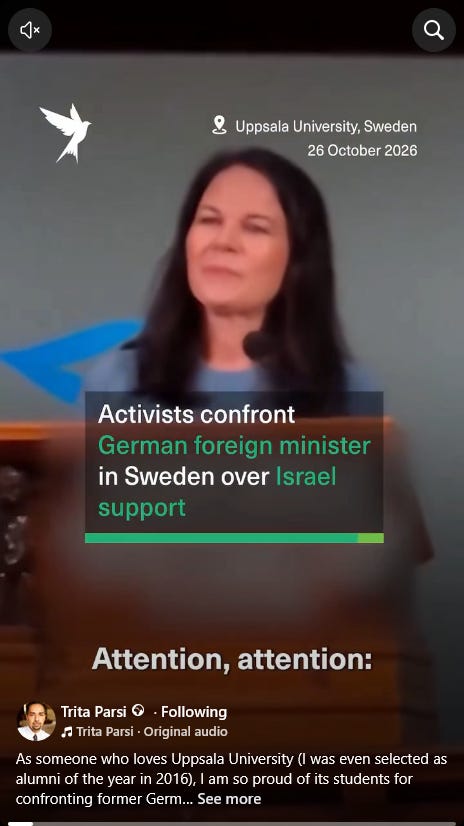
Read Trita Parsi’s Facebook Post where this video-clip appeared.
German Imperialism: An Urgent Explainer
November 2, 2026
The following excerpts are from this Scheer Post link.
The fate of Central and Eastern Europe after the People’s Democracies’ post-1989 fall cannot be fully appreciated without reference to the EU as an extension of German imperialism. Berlin’s drive to ensure the region remains composed of weak, frequently mutually-resentful microstates has endured for well-over a century. Over time, battlefield conquest and occupation has been supplanted by economic and monetary union, and ever-rising military, security and intelligence “interoperability” and “cooperation”, all conducted under “internationalist” auspices.
Comprehending this process and the consistent needs of German imperialism provides a typically absent, critical lens through which to view events such as Yugoslavia’s destruction, the rise and recent demise of Hungary’s Viktor Orban, and seen and unseen political machinations throughout the Balkans old and new. German imperialism is a potent, dangerous force frequently overlooked due to its nigh-invisible operation. With US global hegemony irreversibly faltering, it is vital to truly understand the phenomenon as it threatens to emerge in its own militarised right again.
Today, German imperialism is little-understood even in countries and regions intimately shaped if not outright created by Berlin’s colonial meddling and concomitant hegemonic expansion. Its historic apotheosis was the 1918 Treaty of Brest-Litovsk. The terms and consequences provide an eerily precise blueprint for the EU’s modern day role as German empire via other means. Despite Brest-Litovsk’s seismic import, mainstream English language accounts are comparatively rare. A highly compelling, informative synthesis is nonetheless provided by Adam Tooze’s much-overlooked 2014 work The Deluge.


Frankfurt Protest: Why Are Young People Taking to the Streets Across Europe?
Reporter
November 2, 2026 | 11:41 am
TEMPO.CO, Jakarta - Riots broke out in Frankfurt on Saturday, October 31, 2026, as demonstrators took to the streets across Germany to demand lower living costs, better education and an end to plans to reintroduce compulsory military service. Stores were looted, barricades set on fire and Molotov cocktails thrown at emergency services, police said.
According to NBC News, tens of thousands of people demonstrated in more than 30 German cities, including Berlin and Frankfurt, in protests organized by the campaign group Gen Z Regelt, or Gen Z Takes Charge. Although most demonstrations were peaceful, some turned violent.
Read the full news report from Indonesia’s leading English publication.
Editor’s note: The full text of this Foreign Policy analysis is cut and pasted below.
Why Is France Perpetually Rioting?
Protest and radicalization are the answer to an authoritarian, centralized state.
By Emile Chabal, a professor of contemporary history at the University of Edinburgh.
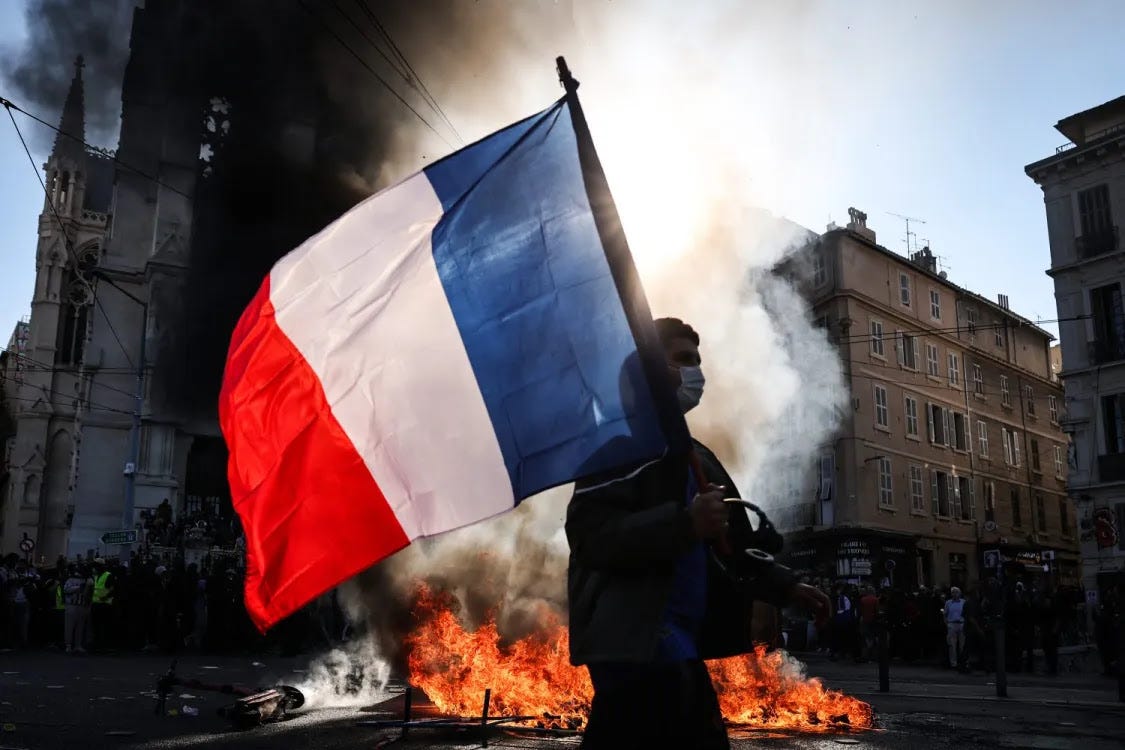
Protester in Marseille, FranceA protester waving a French flag walks past a fire during clashes between demonstrators and police in Marseille, France, on Oct. 17. Thibaud Moritz/AFP via Getty Images
October 19, 2026, 3:03 PM
When I first started studying contemporary France as a graduate student in 2006, the country was still reeling from a convulsion of urban violence triggered by the deaths of two teenagers in an electrical substation as they were hiding from police. For several weeks in late 2005, the country had gone up in flames as angry young people protested against police violence, racism, social inequality, and the broken promises of France’s social contract.
Fast forward 20 years, and the images of France being broadcast to the world are the same. What began as a protest by high school students has escalated into a nationwide cry of exasperation, punctuated by looting, the ritual burning of public buildings, and a cascade of violence meted out by riot police armed with smoke grenades and tear gas.
No less predictable has been the cascade of hot takes by commentators, politicians, shock jocks, and activists, all looking to capitalize on the spectacle of French people taking to the streets. For the most part, this has involved endless platitudes about the French—who are said to be especially revolutionary or pathological, depending on your view—or outright untruths about a supposed invasion of migrants destroying French and Western civilization.
For those of us who have worked on contemporary France for much of our careers, the rush to commentary is exhausting. But it does at least highlight one of the signature questions of our field: Why is it that modern France seems to be a land of protest? And no less importantly, why does anyone still care about what happens in a medium-sized European country that has long ceased to be a global power?
The answer to the first question—about the omnipresence of protest—does not have an easy answer, but the facts are beyond doubt. According to Armed Conflict Location & Event Data, which monitors political violence and protests worldwide, there have been about 20 protests a day in France in recent years. These are often small and localized, but sometimes they are nationwide, with hundreds of thousands of people taking part.
Crucially, protesting is an activity for everyone in France. The idea that only young left-wing activists march in the streets is wildly inaccurate: Some of the biggest protest movements of the last 50 years have been led by the right, most famously the huge demonstrations against reforms to private schooling in 1984 and same-sex marriage in 2013.
For such a culture of protest to develop across the political spectrum, two basic elements are needed: the politicization of the fight against injustice and a belief in the power of the street. Both of these have been present in France for a long time.
The idea that opposition to any perceived injustice must be politicized—and that any such politicization can take the form of insurrectionary violence—has a long and distinguished pedigree in France. It was the French, after all, who first showed the world what ideology-driven revolutionary insurrection looked like. France also bequeathed to the world the perennial distinction between “right” and “left,” a divide that became the basic coordinates of parliamentary and extra-parliamentary politics worldwide. Time and again, from 1789 onward, the French have made protest more than the sum of its parts.
This politicization of discontent has not translated into stable institutions. France has had multiple republics and dictatorships since the French Revolution; compared with other Western countries, it has had relatively weak intermediary bodies. It is not a land of strong political parties or powerful trade unions. In fact, rates of union membership in France have long been much lower than elsewhere in Europe. Contrary to widely held perceptions of the French as perpetually “on strike,” the speed with which popular protest develops is an indication of the weakness of institutions that might channel discontent.
The presence of a strongly authoritarian, centralized state has not helped. For at least a century, if not more, the French state has been top-heavy and technocratic. Its grand plans for reconstruction after World War II, for instance, were elaborated by the central government with no real popular consultation, and the foundation of today’s constitutional settlement—the Fifth Republic—was explicitly anti-democratic in its elevation of presidential authority and the subservient role given to the French Parliament when it was devised in 1958.
All of which means that protest is one of the few ways in which French people can make themselves heard beyond the ballot box. Memories of earlier struggles are passed down through the generations as older activists tell their youthful comrades stories of their first protest, parents come out in support of their children, and teachers stand in solidarity with their students. As any good French protester knows, the symbols, language, and power of protest resonate across decades and even centuries.
And it sometimes works: Protesters do get their way, and reforms do get reversed. Every French government knows—and fears—the judgment of the street, which can be harsh and uncompromising.
This is one of the reasons that French governments frequently take preemptive action in the form of violent, sometimes murderous, repression. From the crushing of the Paris Commune in 1871 to today’s police violence, the French authorities often shoot first and ask questions later. Remarkably resistant to 21st-century de-escalation strategies, they still operate according to 19th-century ideas about the irrational mob, and they see everyone from schoolchildren to football fans as a potential threat.
Yet this only hardens the resolve of protesters. Some take to outright violence, joining petty criminals in the destruction of private and public property, while others record TikTok videos in front of riot police, lampooning a state that sees its citizens as a perpetual nuisance.
Of course, many contemporary protest movements go through a similar cycle. At the same time as the protests in France were taking place, hundreds of thousands of young Indians were launching their own movement to protest against another authoritarian state—and they met with an equally robust response.
So why do protests in France continue to capture the public imagination?
Some of this no doubt has to do with a tendency, especially in the Anglosphere, to imagine France as a volatile dystopia. Much of 19th-century British politics was built around a myth of stability that was positively contrasted with France’s revolutionary upheavals, and this characterization of France is still very much alive. More recently, the great conservative intellectual Roger Scruton attributed more or less his entire political outlook to his experiences in Paris during May 1968.
But there is something deeper than simply prejudice and national stereotypes. Despite its much-reduced global status, France has managed to maintain its status as the vanguard of European radical politics on both sides of the political spectrum. Protesters in Paris—like the teenager Elwan, whose eloquent paean to left-wing politics quickly went viral—appear to be more articulate than their peers elsewhere, and the intensity of their revolutionary symbolism gives them global appeal.
It is surely no coincidence that much of the protest imagery of the contemporary far left is French in origin. So is one of the biggest slogans of the global far right—the “Great Replacement” theory, which posits that a cabal of liberal elites seeks to replace the native population with migrants.
Although the French do not have a monopoly on protest—far from it—they have spent more time than anyone else packaging it for public consumption, and their ideas continue to shape political movements around the world. This alone makes it worth examining closely what happens on the streets of Paris, Lyon, and Marseille.
Emile Chabal is a professor of contemporary history at the University of Edinburgh and the author, most recently, of The Age of Hobsbawm: The Life of a Revolutionary Historian.
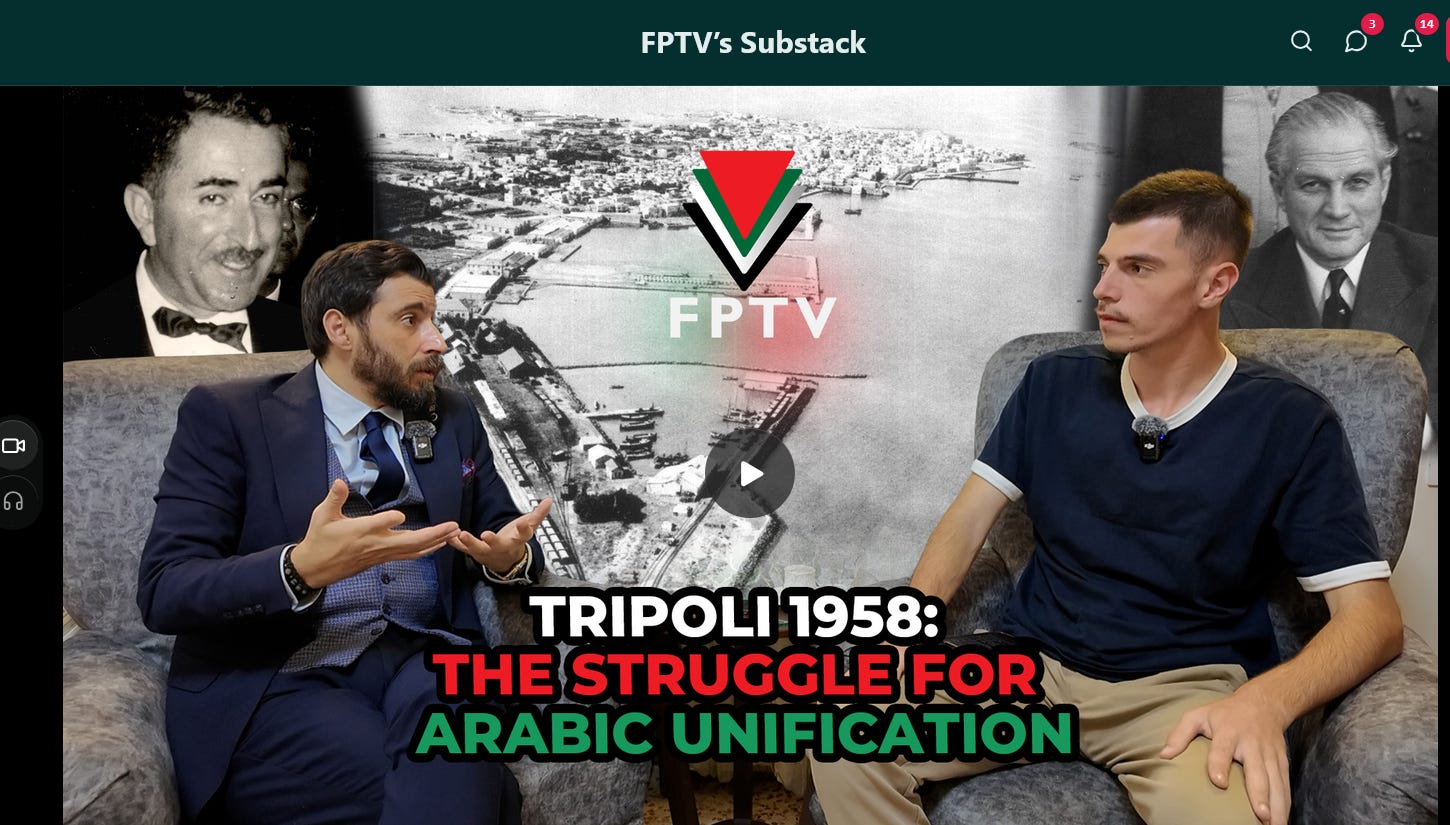
Watch the above Free Palestine TV discussion here.
Haiti: Bukele, Mercenaries and the Profitable Art of Fighting Violence Without Ending It
11 hours ago
Foreign soldiers on the ground. Private military contractors operating drones overhead. Gangs controlling neighbourhoods. Politicians promising elections while citizens struggle to survive. Haiti is becoming a laboratory for twenty-first-century warfare, but the oldest questions remain unanswered: who produces the violence, who profits from it, who is accountable, and who will rebuild the country when or if the foreign rescuers have gone home?
Read the full text of this analysis by Raïs Neza Bonezaa of the TMS Editorial Team.
Thank you especially for the very last item in this compilation, the interview with historian and peace researcher Daniele Ganser. Very worth watching!